JAPAN MUSIC EDUCATION SOCIETY
Introduction
The purpose and activities of Japan Music Education Society
The Japan Music Education Society (Society) aims to conduct research and discussions on music education, promote international exchange, and contribute to the academic promotion of music education.
To achieve this goal, the Society engages in the following activities and initiatives:
・Holding academic conferences and research meetings related to music education.
・Editing and publishing the academic journal “Music Education” and other publications.
・Collecting and investigating research materials.
・Exchanging research materials with foreign organizations.
・Carrying out other necessary activities to achieve its objectives.
The Society is an academic research group that collaborates with the Science Council of Japan.
Greeting
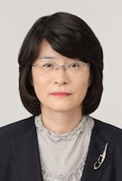
The President of the 25-26th Term: Atsuko Gondo (Hiroshima University)
Amidst recurring disasters, the pandemic, and acts that threaten people’s lives, safety, international order, and peace, I have received the baton to run the 25th term of the Society. Beyond my personal feelings of pain for our current circumstances, I sincerely accept the opportunity to confront the Japan Music Education Society (JMES), entrusted with the Society’s responsibilities. As stated in the preamble of the “JMES Code of Ethics,” this Society aims to “promote music education research and contribute to the development of music education activities through mutual research discussions among members on music education.” I will do my best to support “various activities aimed at achieving this goal” while keeping in mind the ultimate goal of “contributing to human happiness and social and cultural development.” Together, with all of you, I hope to think about what we can and should do, and work toward achieving these goals.
As is well known, “music” is an incredibly diverse and rich culture that is essential to humanity, and “education” is the most fundamental activity for building the world for the future. The mission of this Society, which is involved in both, can be said to be in line with the goal of “contributing to human happiness and social and cultural development” and constructing “the defences of peace” (UNESCO) in the minds.
At the 29th Hiroshima Conference in 1998, one of the panelists, Shokichi Kina, presented a document with the phrase “turn all weapons into musical instruments” written in large letters. In the panel discussion titled “Re-examining Music Education from the Perspective of Peace Education,” discussions ranged from practical musicianship to ethnomusicology and everyday music lessons. The experience of the conference, which welcomed participants with a performance on the Sanshin of “Hana – A Flower in Everyone’s Heart,” Gregorian chants, organ performances, and singing with the Gayageum and Japanese taiko drums, became a starting point for me to consider music education through the Society, as I was involved in the preparation as a member of the executive committee. In addition, at the Chugoku Regional Meeting in 2005, several Canadian middle and high school students who performed R. Murray Schafer’s composition “Threnody” visited the Hiroshima Peace Memorial Museum on their own two days before the concert. I was struck by the soft hearts and earnest efforts of the children who transformed their performance as a result of this experience.
I believe it is essential to ensure that the encounter with JMES is meaningful for each and every one of the over 1,500 members with diverse backgrounds, as well as for those who are interested in and involved with the Society. I hope to create a space where you can deepen your research and practice through exchanges in various activities in the Society, and play a role in supporting you through various plans, publications, and public releases. While inheriting the policies of the previous term, “promoting research and practice that respect diversity and exchanges thereof” and “engaging all generations,” I will strive to build a strong society organization that supports your activities by examining your convenience and the Society’s sustainability.
Through my involvement in the creation of the ethical guidelines, I have learned that ethics, values, and the best course of action are never singular, but rather differ depending on one’s position. The Society has the responsibility to question and reflect on whether its activities respond to the Society’s trust and strive for the best for all members. I am convinced that each member’s research and practice in their diverse positions and the establishment of an activity base that supports each other’s self-realization will lead to the Society’s self-realization, which aims to “contribute to human happiness and social and cultural development” as stated at the beginning. Together, with the officers, committee members, staff of the secretariat staff, and all other members, I would like to step forward firmly. Thank you for your support.
Membership Registration and Fee Payment from Overseas
Please enter the required information by downloading the following registration form, fill in the required information, and submit it to the JMES office by email attachment, fax, or mail.
Please transfer the annual fee ( ¥ 7,000 )― in Japanese yen to the following bank account: Please note that the handling fees for currency exchange and beneficiary bank charges will be borne by the remitter.
Bank Name: MIZUHO BANK, LTD.
Address: 5-13-3 Honcho, Koganei-shi, Tokyo 184-0004, Japan
Telephone No. :+81-42-381-6301
Swift Code: MHCBJPJT
Branch Name: KOGANEI BRANCH
Beneficiary’s Account No.: 114-644777 Current account
Beneficiary Name: NIHONONGAKUKYOIKUGAKKAI
Credit card payment is available from April 5 to October 31, 16:00 (Japan time). Please follow the instructions in Japanese from the URL below.
日本音楽教育学会 第55回大会(年会費支払専用) (tobutoptours.co.jp)
Membership registration will be completed by transferring the membership fee. Check the reply from the secretariat.
Please note that to apply for a presentation at the research conference held every fall, you must complete the membership registration and annual fee payment by the end of May.
Japan Music Education Society Office
For membership applications and payment of fees from outside of Japan, please contact us at the following address:
 remus.dti.ne.jp
 Link to Related Organizations
Career support portal site for all researchers and research staff who are pioneering innovation
National Institute of Informatics
Japan Society for Promotion of Society
Japan Society and Technology Agency
International Society for Music Education
Proceedings of the 13th Asia-Pacific Symposium for Music Education Research